Origins of the US Navy Body Fat Estimate
The Navy calculator body fat method emerged from a practical military problem: how do you assess body composition across thousands of sailors without DEXA scanners, hydrostatic tanks, or clinical appointments at every duty station? The solution was a circumference-based formula that estimates body fat percentage from neck, waist, and hip measurements combined with height — equipment every medical clinic already owns.
Developed and validated against densitometry reference data, the US Navy body fat estimate became one of the most widely used field formulas in the world. Marines, Army, and Air Force adopted similar or identical approaches. Fitness professionals, personal trainers, and civilians adopted it next because the protocol is free, repeatable, and reasonably accurate for population-level screening.
Today, the Navy body fat calculator on Body Fat Estimator App brings this validated methodology to anyone with a tape measure and internet access. Combined with the photo AI body fat estimator, it forms half of a complementary tracking system designed for trend observation rather than laboratory precision.
Understanding where the Navy method came from clarifies what it can and cannot do. It was built for screening large groups quickly, not for diagnosing individual medical conditions. Used with that expectation, the Navy calculator body fat estimate remains one of the best free tools available for home composition tracking.
Navy Body Fat Calculator Inputs and Formulas
The Navy calculator requires different inputs by sex because fat distribution patterns differ between men and women.
Men provide: height, neck circumference, and waist circumference (abdominal, at the navel).
Women provide: height, neck circumference, waist circumference (at the narrowest natural waist), and hip circumference (at the widest gluteal protrusion).
The formula applies logarithmic relationships to the ratio of these measurements. Conceptually, as body fat increases, waist and hip circumferences grow faster than neck circumference. The math converts that geometric shift into an estimated body fat percentage.
You do not need to perform the logarithmic calculation manually. The Navy body fat calculator accepts your measurements in inches or centimeters and returns the body fat estimate US Navy protocols produce. Your job is measurement accuracy and consistency — the calculator handles the rest.
Output is a single number: estimated total body fat percentage. The Navy method does not separately report visceral fat, subcutaneous fat, or lean mass. For abdominal fat distribution screening, use the visceral fat calculator alongside your Navy estimate.
Step-by-Step Navy Measurement Protocol
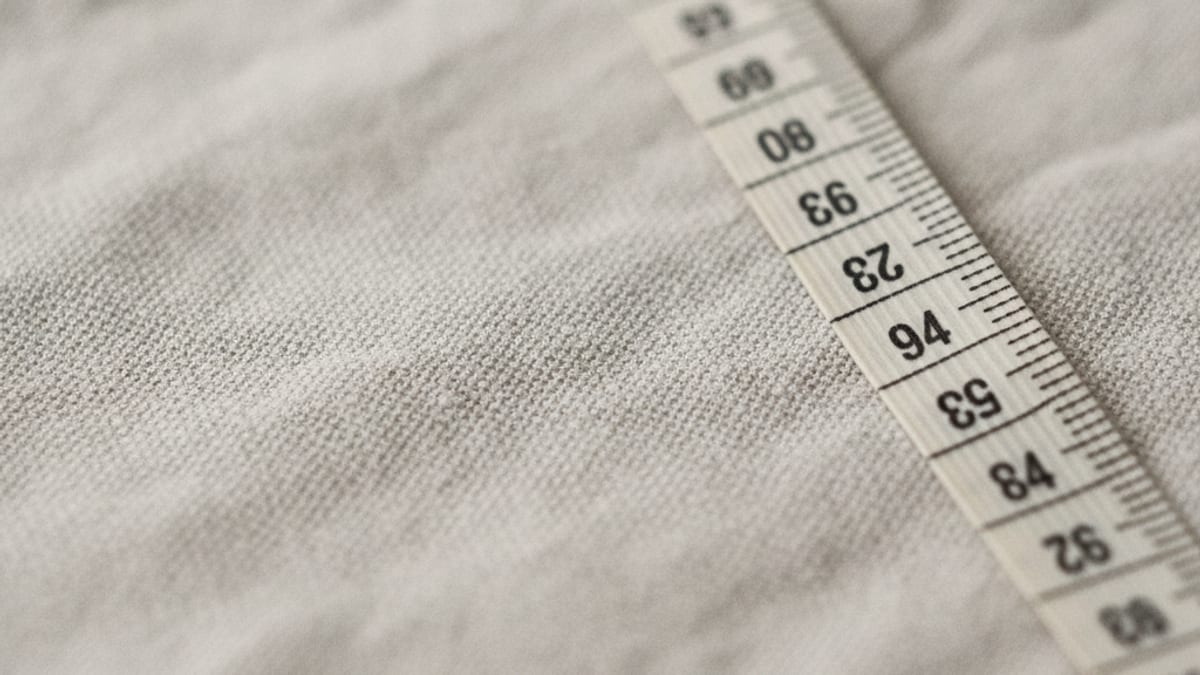
Navy calculator accuracy lives or dies at the tape measure. Follow this protocol precisely for every check-in.
Preparation. Stand on a hard floor without shoes for height verification. Use a flexible, non-stretch tape. Measure in the morning before large meals. Wear minimal clothing.
Neck. Place the tape around the neck just below the larynx, with the front of the tape sloping slightly downward toward the Adam's apple. Eyes forward, shoulders relaxed. Tape horizontal at the back of the neck. Record to the nearest quarter inch.
Waist — men. Measure at the navel line with the abdomen completely relaxed. Do not suck in, do not push out. Tape parallel to the floor, snug without compressing skin.
Waist — women. Measure at the narrowest natural waist, which may sit above or below the navel depending on individual anatomy. Do not assume the men's navel landmark applies.
Hips — women only. Feet together, weight balanced. Tape around the maximum extension of the buttocks, horizontal to the floor.
Double measurement. Take each site twice. Average the readings. If two waist readings differ by more than half an inch, measure a third time — inconsistent placement is the most common error source.
Enter averages into the Navy calculator immediately. Log the result with the date before proceeding to photo AI estimation.
Navy Calculator Accuracy and Known Error Sources
Research on Navy body fat estimation typically reports accuracy within three to four percentage points of densitometry reference values for many populations when measurements follow protocol. Individual error can exceed that range.
Common error sources include:
Inconsistent landmark placement. Moving the waist tape one inch up or down can shift results by several percentage points. Mark your measurement sites with a washable pen during your first session.
Tape tension variation. Pulling too tight compresses soft tissue and lowers estimates. Leaving the tape loose inflates them. Snug and horizontal is the standard.
Post-meal measurement. Food volume and gas distension temporarily increase waist circumference without changing body fat.
Post-exercise pump. Core and oblique blood flow after training inflates waist readings for hours.
Muscle confounding. Developed neck musculature from wrestling or heavy trap training increases neck circumference, potentially lowering estimates independent of fat change. Oblique hypertrophy can inflate waist readings without proportional fat gain.
Population mismatch. Formulas calibrated on military populations may show systematic bias for civilians with very different composition profiles.
These limitations do not invalidate the Navy calculator — they define how to use it. Track trends across eight to twelve consistent measurements. Compare each reading against your own prior readings, not against a friend's or a social media target.
Navy Calculator vs. Photo AI on Body Fat Estimator App
The Navy calculator body fat estimate and photo AI estimation on Body Fat Estimator App represent complementary approaches to the same question: what is my approximate body fat percentage?
Navy calculator strengths: protocol-driven, equipment-minimal, validated against densitometry in military research, independent of camera and lighting variables.
Navy calculator weaknesses: sensitive to measurement technique, assumes typical fat distribution, can misread muscular builds at circumference sites.
Photo AI strengths: fast, no tape measure, captures overall visual distribution, easy to repeat biweekly.
Photo AI weaknesses: sensitive to lighting, posture, clothing, and training data demographics.
Best practice: run both on the same day every one to two weeks. Log both results. When Navy body fat estimate US Navy protocols produce and photo AI agree directionally over two months, your fat-loss or maintenance program is confirmed. When they diverge sharply on a single day, audit technique before changing nutrition.
Neither method replaces clinical assessment for medical purposes. Both excel at the frequency DEXA cannot match — regular check-ins that reveal composition trends over time.
Interpreting Your Navy Body Fat Estimate
A Navy calculator result is most useful interpreted against sex-appropriate ranges and your personal trend history — not against universal "ideal" numbers.
General reference ranges (approximate, for context only):
- Essential fat: men 2–5%, women 10–13%
- Athletes: men 6–13%, women 14–20%
- Fitness: men 14–17%, women 21–24%
- Average: men 18–24%, women 25–31%
Individual variation is enormous. Two people at 22% can look and perform differently based on muscle mass and fat distribution. Women require higher essential fat than men for hormonal health. Older adults may function optimally above young athletic ranges.
Trend interpretation during fat loss: expect roughly 0.5 to 1.0 percentage point decline per month under moderate caloric deficit. Faster drops often include water weight. Plateaus lasting four or more weeks warrant nutrition and activity review.
Trend interpretation during muscle gain: Navy estimates may rise if surplus calories produce fat gain faster than muscle. Stable estimates during a lean bulk suggest favorable recomposition.
Pair Navy results with scale weight, independent waist measurement, strength performance, and progress photos. The estimate anchors quantitative tracking; everything else confirms you are moving in a healthy direction.
When Navy Calculator Results Warrant Professional Follow-Up
Navy calculator body fat estimates are educational fitness tools. Certain situations call for professional assessment beyond web calculators.
Consult a healthcare provider if Navy estimates approach essential fat floors (below 5% for men, below 13% for women), if you experience unexplained rapid composition change, if waist circumference remains elevated despite falling body fat estimates, or if composition concerns intersect with metabolic symptoms — blood pressure, glucose, lipids.
The visceral fat calculator flags abdominal distribution patterns associated with metabolic risk, but it does not diagnose disease. Elevated visceral fat estimates combined with other risk factors deserve clinical conversation.
Reserve DEXA or clinical body composition assessment for medical documentation, research participation, or occasional calibration of your home Navy calculator baseline. Use the free Navy calculator for the biweekly frequency that makes trend tracking possible.
Frequently Asked Questions
Is the Navy calculator body fat method accurate?
The Navy body fat estimate is typically accurate within three to four percentage points for many adults when measurements follow protocol. Trend tracking over weeks is more reliable than any single reading.
What measurements does the Navy body fat calculator need?
Men: height, neck, and waist at the navel. Women: height, neck, waist at narrowest point, and hips at widest point. The Navy body fat calculator handles formula application automatically.
How is the body fat estimate US Navy formula different from BMI?
BMI uses only height and weight. Navy formulas incorporate circumference ratios that reflect fat distribution. Navy estimates generally correlate better with actual body fat percentage than BMI alone.
Can I use the Navy calculator without military affiliation?
Yes. The Navy method is a public-domain field estimation technique used widely outside the military for fitness tracking.
Should I combine the Navy calculator with photo estimation?
Yes. Independent methods that agree directionally over time provide stronger confidence in composition trends than either method alone. Both are free on Body Fat Estimator App.
Run the Navy Body Fat Calculator Free
The Navy calculator body fat method has screened millions of service members — now you can use the same protocol from home for free.
Body Fat Estimator App offers the Navy body fat calculator alongside the photo AI body fat estimator and visceral fat calculator.
Explore pricing for unlimited Navy calculator sessions, saved measurement history, and premium tracking. Measure once, recalculate every two weeks, and watch your Navy body fat estimate reveal the trend that scale weight hides.