What Each Calculator Actually Asks You For
Body fat calculators look interchangeable from the outside — you type numbers in, a percentage comes out. Underneath, they ask for completely different things, and each input carries a different amount of weight in the final answer. Knowing which of your measurements the math leans on hardest tells you where to spend your attention.
| Calculator type | Required measurements | Most influential input |
|---|---|---|
| Navy, male | Height, neck, waist at navel | Waist |
| Navy, female | Height, neck, waist at narrowest, hip at widest | Waist + hip sum |
| Skinfold (Jackson-Pollock 3-site) | Three caliper folds, age, sex | Sum of folds |
| BMI-derived (Deurenberg) | Height, weight, age, sex | Weight |
| Photo AI | Front and side images | Image conditions |
| Bioimpedance | Weight, height, age, sex, impedance | Hydration state |
Two patterns stand out. First, the methods with the fewest inputs are not the easiest — they are the least specific, because two very different bodies can supply identical numbers. Second, every method has one dominant input where a small error swamps everything else you did carefully.
The rest of this guide walks each method's measurement list and quantifies what happens when a single input goes wrong. All the worked numbers below use two reference people: a man at 5'10" and 182 pounds with a 15.25-inch neck and 36.5-inch waist, and a woman at 5'5" with a 12.75-inch neck, 29.5-inch waist, and 39-inch hip.
Navy Formula Measurements for Men and Women
The Navy equation is a logarithmic function of circumference differences. Men supply three measurements; women supply four, because hip circumference is needed to capture gynoid fat storage that a waist reading alone misses.
Neck, both sexes. Measure just below the larynx with the tape sloping slightly downward at the front and horizontal across the back. Stand relaxed and look straight ahead — tilting your chin up adds a quarter inch instantly. Do not let the tape ride up onto the trapezius.
Waist, men. Horizontal at navel level, abdomen relaxed at the end of a normal exhale. The protocol specifically does not want you braced or holding your breath.
Waist, women. The narrowest point of the natural waist, which usually sits an inch or two above the navel. This is a different landmark than the male protocol, and using the navel instead will change your result.
Hip, women. The widest point across the buttocks, feet together, tape horizontal all the way around. Checking the level in a mirror is worth the extra thirty seconds.
Height, both sexes. Shoes off, heels down, measured once carefully rather than recalled from a driver's license.
Enter these into the Navy body fat calculator and it applies the formula and unit conversions for you. Your only job is producing measurements you can reproduce a fortnight from now.
How a Bad Input Propagates Into Your Result
This is the part most guides skip. Here is what each measurement error actually costs, using the reference man, whose correct inputs return 21.7%.
Waist too high by half an inch: 22.6%. An error of +0.9 points from one loose tape pull.
Waist too high by a full inch: 23.4%. Now +1.7 points. Measuring at the widest point of the belly instead of at the navel easily produces a full inch on many bodies.
Neck too high by an inch: 19.9%. A 1.8-point drop. The neck term is subtracted, so sloppy neck measurement flatters you. Letting the tape sit on the base of the neck rather than below the larynx is the usual cause.
Height too high by an inch: 21.3%. Only −0.4 points. Height is genuinely the forgiving input here.
The pattern for men: roughly 1.7 to 1.8 points of movement per inch of circumference error, and about 0.4 points per inch of height error. Since a real month of fat loss is 0.5 to 1.0 points, a single careless waist reading can manufacture or erase a month of apparent progress.
The female formula is less twitchy per inch. For the reference woman, correct inputs return 29.5%. An extra inch on either the waist or the hip moves the result to 30.8%, and an extra inch of neck drops it to 28.2% — about 1.3 points per inch in each direction. An extra inch of height costs 0.65 points. The tradeoff is that there are four chances to be wrong instead of three, and errors do not reliably cancel.
Measure twice, always. If two readings at a site differ by more than half an inch, take a third and average. This one habit removes most of the error described above.
Skinfold Measurements: Sites, Equations, and Technique
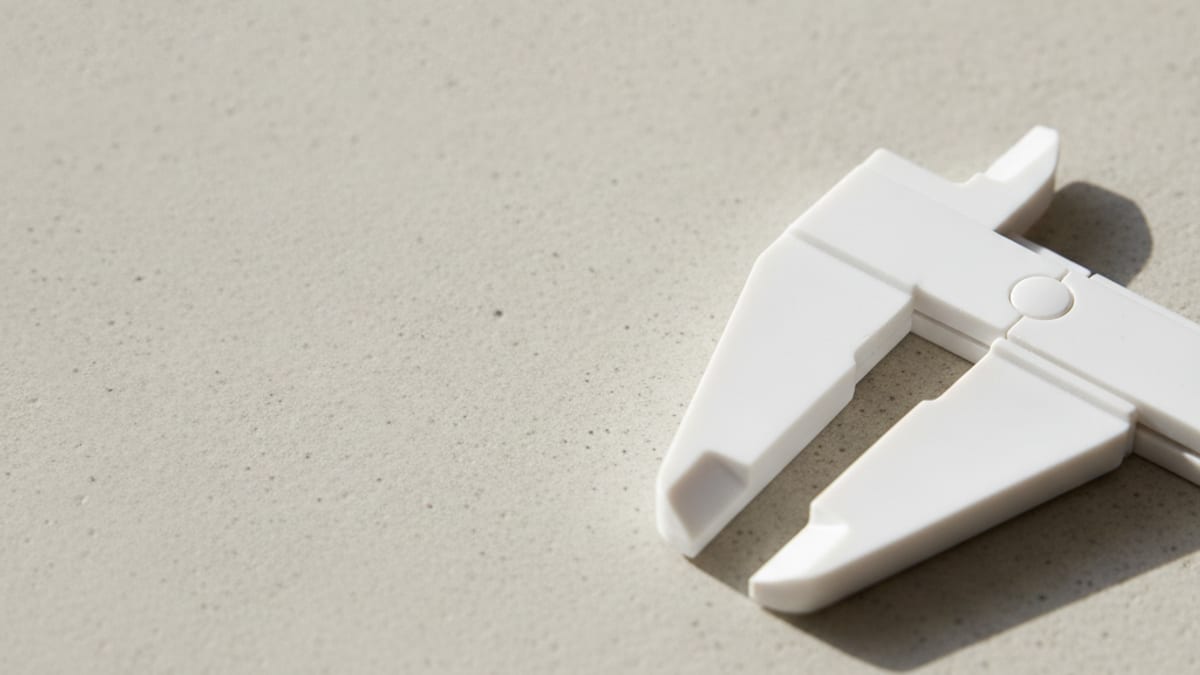
Skinfold calculators do not take circumferences at all. They take fold thicknesses in millimeters, plus age and sex, and run them through a regression that predicts body density before converting to a percentage with the Siri equation.
Jackson-Pollock three-site, men: chest (diagonal fold halfway between nipple and anterior axillary line), abdomen (vertical fold one inch right of the navel), and thigh (vertical fold midway between hip crease and kneecap).
Jackson-Pollock three-site, women: triceps (vertical fold at the midpoint of the back of the upper arm), suprailiac (diagonal fold above the hip bone), and thigh at the same landmark as men.
Age and sex are not cosmetic fields. The density equation includes an age coefficient because the same fold thickness implies more internal fat at 50 than at 25. Entering the wrong age by ten years shifts a men's estimate by roughly 1.2 points.
Sensitivity to the folds themselves. For a 34-year-old man with a three-site sum of 45 mm, the calculator returns about 14.1%. Push the sum to 50 mm — under 2 mm of error at each site — and it returns 15.5%. That is roughly 0.3 points per millimeter of total sum, and 2 mm of variation per site is entirely normal between two people pinching the same body.
The dominant error source is the tester, not the caliper. Self-measuring your own suprailiac fold while reading a dial is awkward, and your back is unreachable. If the same trained person cannot measure you every time, skinfolds lose the consistency that makes them worth the trouble.
BMI-Derived and Scale-Based Estimates: Fewer Inputs, Bigger Error
BMI-based calculators such as the Deurenberg equation need only height, weight, age, and sex. That short list is exactly the problem.
Worked example. Our reference man has a BMI of 26.1 at 182 pounds and 5'10". The equation returns 23.0% — reasonably close to his 21.7% Navy estimate, which is what makes these calculators look credible.
Now change the body, not the inputs. A powerlifter at the same height, weight, age, and sex returns the identical 23.0%, whether he is actually at 12% or 30%. The calculator has no measurement that distinguishes them, so it cannot. It is describing the average person with those four attributes.
Weight error is the propagation path. Five pounds of measurement error — clothing, a large meal, an uncalibrated scale — shifts BMI by 0.7 and the estimate by about 0.9 points. Weighing in shoes and jeans is a real 3 to 5 pounds.
Bioimpedance scales add one more input you cannot see. Impedance depends on body water, so the hidden measurement is your hydration state. A salty dinner or a hard training session the night before can move the reading several points with no tissue change. If you use one, weigh in fasted, first thing, after the bathroom, every single time.
Waist-to-height ratio is the exception worth keeping. It needs only two measurements and does not pretend to estimate total fat — it screens abdominal distribution, where the waist input is doing honest work. The visceral fat calculator uses exactly those two numbers.
Photo Inputs and a Repeatable Measurement Protocol
Photo AI replaces tape measurements with images, which does not eliminate measurement error — it relocates it. The photo AI estimator infers composition from visible proportions, so anything that changes how your proportions render is functionally a bad input.
Camera distance and height. Six to eight feet away, lens at chest height. Shooting from below adds apparent torso mass; shooting from above shrinks it.
Clothing. Fitted shorts and a fitted top, or swimwear, and the same choice every session. A loose t-shirt hides the exact contours the model reads.
Lighting. Even, frontal light from a window or two lamps. Overhead lighting casts abdominal shadows that read as contour depth.
Posture. Arms slightly away from the sides, feet shoulder-width, normal relaxed exhale. Bracing your core between sessions creates change that is not there.
Both angles. Front and side. The side profile carries abdominal depth information the front view cannot supply.
Whichever method you use, the protocol that protects your data is the same: measure in the morning before eating, keep hydration ordinary the day before, use the same tape and same room, record the raw inputs and not just the output percentage, and change nothing about your technique mid-series. Logging raw inputs is what lets you diagnose a strange result later — a 2-point jump traces back to a waist reading that moved an inch, and you can see it in your own notes. Saved history and side-by-side input logs are covered on the pricing page if you would rather not maintain a spreadsheet.
Frequently Asked Questions
What measurements do I need for a body fat calculator?
Men need height, neck, and waist. Women add hip. Skinfold calculators need three caliper folds plus age and sex; photo tools need front and side images.
Where exactly do I measure my waist?
Men measure horizontally at the navel; women measure at the narrowest natural point. Using the wrong landmark can shift a result by more than a point.
How much does a bad measurement change my body fat percentage?
For men, roughly 1.7 points per inch of circumference error. For women, about 1.3 points. Height errors cost far less, near 0.4 to 0.65 points per inch.
Should I measure relaxed or flexed?
Relaxed, at the end of a normal exhale. Bracing or sucking in breaks comparability with your earlier readings.
Do I need a tape measure to estimate body fat?
No. The photo AI estimator needs only a phone, though it trades tape error for photo-condition error.
Take Your Measurements Today
Good inputs, taken the same way every time, matter more than which calculator you choose.
Run your numbers through the Navy body fat calculator on Body Fat Estimator App, cross-check with the photo AI estimator, and screen abdominal distribution with the visceral fat calculator. Write down the raw measurements, not just the percentage — your future self will need them.