Why Calculating Body Fat Matters More Than Weight Alone
Calculating body fat percentage answers a question the scale cannot: of everything you weigh, how much is fat tissue versus lean mass? Two people at identical body weight can have radically different body compositions. One may carry substantial muscle with moderate fat; another may carry excess fat with minimal muscle. Weight alone obscures that distinction and can mislead both fat-loss efforts and health assessments.
Body fat percentage contextualizes progress during a recomposition phase — when you lose fat and gain muscle simultaneously. The scale might barely move while body fat percentage drops and strength increases. Without calculating body fat, you could abandon a working program because total weight stalled. Conversely, rapid scale loss during crash dieting may include muscle loss that a body fat calculation would reveal.
For fitness planning, calculated body fat helps set realistic targets. Losing ten pounds means something different at 30% body fat versus 18% body fat. Nutrition timing, deficit size, and training emphasis all shift based on how much fat you carry relative to lean mass. Calculating body fat at regular intervals transforms abstract goals into measurable trends.
The key mindset is estimation, not laboratory precision. Consumer methods to calculate body fat — circumference formulas, photo analysis, bioimpedance scales — carry error margins of several percentage points. They remain valuable because fat loss and muscle gain happen slowly enough that consistent recalculation reveals real direction over eight to twelve weeks.
Circumference Formulas: The Navy Method Explained
The most accessible way to calculate body fat without specialized equipment is the U.S. Navy circumference method. Developed for military fitness assessments, it estimates body fat percentage from neck, waist, and hip measurements combined with height. The Navy body fat calculator on Body Fat Estimator App applies these validated formulas for free.
For men, the calculation uses height, neck circumference, and waist circumference at the navel. For women, hip circumference joins the equation because women store fat differently across the hips and thighs. The underlying math converts circumference ratios into an estimated body fat percentage using logarithmic relationships derived from population data.
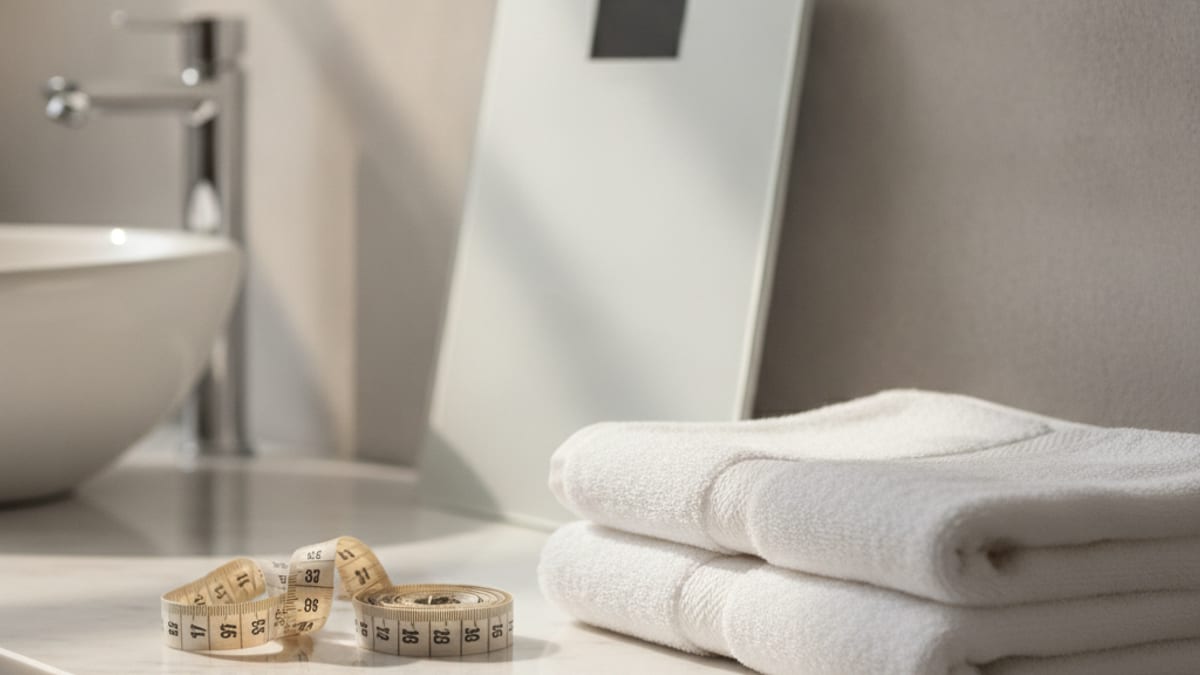
Proper technique determines result quality. Stand relaxed with feet together. Wrap a flexible tape measure around the neck just below the Adam's apple, keeping it horizontal. Measure the waist at the navel for men; for women, measure at the narrowest natural waist per protocol. Hips are measured at the widest point of the buttocks. Record each measurement twice and average them. Enter height in inches or centimeters consistently with your prior check-ins.
The Navy method typically estimates within three to four percentage points for many adults when measurements are taken correctly. Error increases with unusual fat distribution patterns, significant muscle hypertrophy at the neck or waist, or inconsistent measurement placement. Treat the output as a calculated estimate — useful for trends, not a clinical diagnosis.
Photo AI: Calculating Body Fat From Images
Photo-based body fat calculation uses machine learning models trained on images paired with known composition data. When you submit front and side photos to the Body Fat Estimator App, the system evaluates body proportions, contour depth, and regional distribution patterns to calculate an estimated body fat percentage.
This approach removes the tape measure from the equation entirely. For people who find circumference measurements awkward or inconsistent, photo calculation offers a repeatable alternative. The tradeoff is sensitivity to photo conditions: lighting, posture, clothing tightness, and camera distance all influence visual analysis.
Best practices for photo-based calculation mirror progress photo guidelines. Wear form-fitting clothing or minimal attire. Use even, front-facing light without harsh shadows. Stand naturally with arms slightly away from the body. Capture both front and side views at consistent distance. Take photos before eating in the morning for the most stable comparison baseline.
Photo AI and Navy calculation complement each other because they derive estimates from independent inputs. When both trend in the same direction over a month, confidence in real composition change grows. When they diverge, review measurement technique and photo setup before assuming your program failed.
Other Methods to Calculate Body Fat
Beyond Navy formulas and photo AI, several methods exist — each with tradeoffs between accuracy, cost, and convenience.
Skinfold calipers measure subcutaneous fat thickness at specific anatomical sites, then apply prediction equations. Accurate caliper use requires training and consistent pinch technique. Results depend heavily on the measurer's skill. Calipers estimate subcutaneous fat well but miss visceral fat entirely.
Bioimpedance analysis (BIA) sends a weak electrical current through the body and estimates composition from resistance. Consumer scales and handheld devices use BIA. Hydration, meal timing, and foot callus thickness skew readings significantly. BIA works for trends if you measure under identical conditions but struggles with absolute accuracy.
DEXA (dual-energy X-ray absorptiometry) scans the entire body and separates bone, fat, and lean tissue with high precision. DEXA is the clinical research gold standard for body composition. Cost, radiation exposure (minimal but present), and appointment scheduling limit it to occasional baseline checks rather than weekly tracking.
Hydrostatic weighing measures body density by comparing dry weight to underwater weight. It was historically the laboratory reference method. Specialized tanks and trained operators make it impractical for home use.
Air displacement plethysmography (Bod Pod) uses air volume displacement to estimate density. Like hydrostatic weighing, it requires specialized facilities.
For ongoing home tracking, Navy circumference calculation and photo AI on Body Fat Estimator App offer the best balance of free access, repeatability, and reasonable accuracy. Reserve clinical methods for occasional calibration or medical needs.
Step-by-Step: Calculate Your Body Fat This Week
Follow this workflow for a reliable first calculation and repeatable check-ins.
Step 1 — Gather inputs. You need height, a flexible tape measure, and a phone with a camera. Optional: a helper for the first Navy measurement session to verify tape placement.
Step 2 — Navy calculation. Measure neck, waist, and hips (women) following protocol. Enter measurements into the Navy body fat calculator. Record the result with today's date.
Step 3 — Photo calculation. Take front and side photos under consistent conditions. Upload to the photo AI estimator. Record the result alongside the Navy estimate.
Step 4 — Contextualize. Compare both numbers. A gap of three to five points between methods is normal. Note which method felt easier to execute consistently — that becomes your primary tracker, with the other as a cross-check.
Step 5 — Set a recheck schedule. Mark your calendar for the same day in one or two weeks. Do not calculate daily.
Step 6 — Assess abdominal fat separately if relevant. If waist-to-height ratio concerns you or you have metabolic health questions, run the visceral fat calculator. Total body fat percentage and visceral fat distribution tell related but distinct stories.
Interpreting Calculated Results Over Time
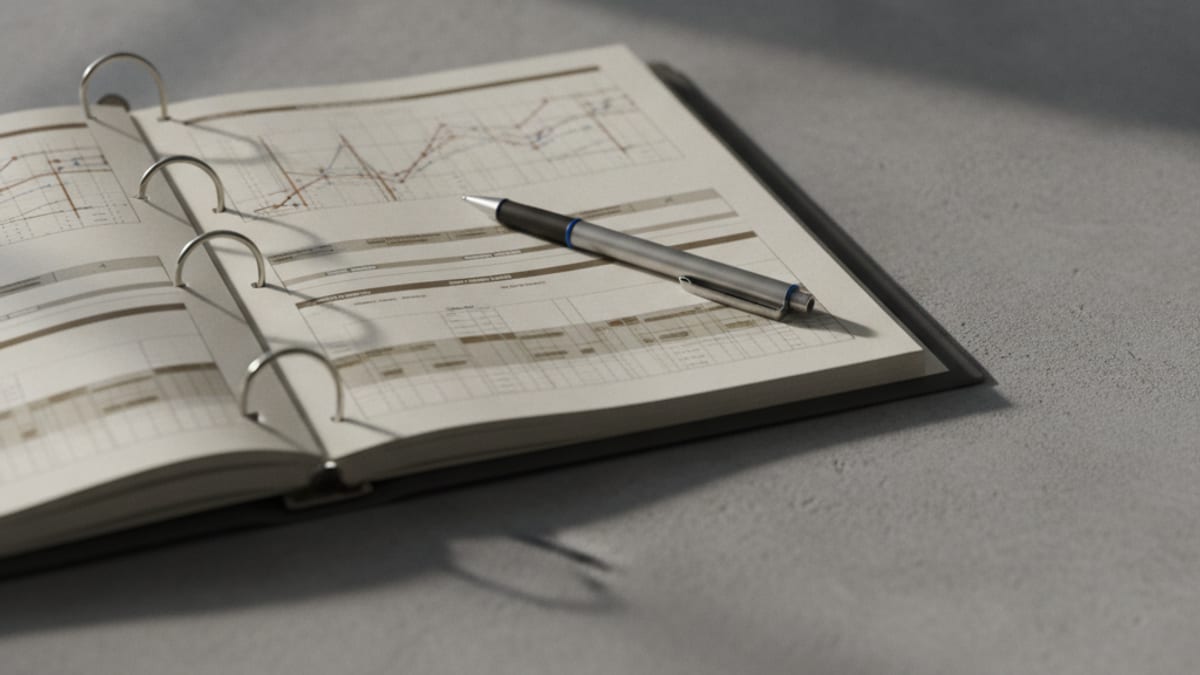
A single body fat calculation is a snapshot with error bars. A series of calculations is a trend line with meaning. Plot your Navy and photo estimates across eight weeks. Look for directional movement, not week-to-week noise.
Meaningful fat loss for most adults falls in the range of 0.5 to 1.0 percentage points per month during a moderate deficit — faster during aggressive cuts, slower during recomposition or maintenance. If both calculation methods show flat readings for a month despite disciplined habits, audit nutrition tracking, sleep, stress, and training volume before changing course.
Muscle gain can mask fat loss on the scale while body fat percentage still drops. Calculated body fat captures this recomposition signal. Conversely, if calculated body fat rises while weight stays stable, you may be gaining fat alongside muscle — a common outcome during unstructured bulk phases.
Avoid anchoring to a single "goal number." Body fat percentage ranges vary by sex, age, and sport. Women require higher essential fat than men. Older adults may function optimally at higher percentages than young athletes. Use calculated trends to confirm your program works, not to chase arbitrary social media physique targets.
Limitations and When to Seek Professional Assessment
All consumer methods to calculate body fat carry limitations. Navy formulas assume typical fat distribution and may misestimate individuals with significant muscle mass at measurement sites. Photo AI reflects training data demographics and photo quality. Neither replaces medical evaluation.
These tools are not medical devices. They do not diagnose obesity, metabolic syndrome, or eating disorders. If calculated body fat concerns you in a medical context — or if you experience unexplained composition changes — consult a healthcare provider who can order DEXA, clinical assessment, or appropriate lab work.
For visceral fat specifically, waist-based calculators estimate abdominal fat distribution risk but do not image organs directly. Elevated visceral fat estimates combined with other risk factors warrant professional conversation, not self-diagnosis from a web calculator.
Honest limitation disclosure makes body fat calculation more useful, not less. You calculate to track direction, validate training decisions, and stay motivated — not to obtain a number suitable for a medical chart.
Frequently Asked Questions
What is the easiest way to calculate body fat at home?
The easiest methods are photo AI estimation via the Body Fat Estimator App and the Navy body fat calculator. Photo AI requires only images; the Navy method needs a tape measure and three circumference measurements.
How do I calculate body fat without calipers?
Use circumference-based formulas (Navy method) or photo AI. Both avoid calipers entirely. Skinfold calipers require trained technique; circumference and photo methods are more beginner-friendly.
How accurate are online body fat calculators?
Online Navy and photo AI calculators typically estimate within three to five percentage points for many users. Accuracy improves when you track trends over weeks with consistent technique rather than treating one reading as exact.
Can I calculate body fat from BMI?
BMI and body fat percentage correlate at population levels but diverge significantly for individuals with high muscle mass. BMI alone cannot calculate body fat percentage reliably. Use dedicated body fat methods instead.
How often should I recalculate body fat?
Every one to two weeks is sufficient for most people. More frequent calculation captures hydration and food volume noise without reflecting true fat change.
Calculate Your Body Fat for Free Today
Body Fat Estimator App makes it simple to calculate body fat percentage from home with two free complementary tools.
Run the Navy body fat calculator with a tape measure for a measurement-based estimate. Upload photos to the photo AI body fat estimator for a visual cross-check. Add the visceral fat calculator when abdominal fat distribution matters.
For unlimited calculations, saved history, and premium tracking features, see pricing. Calculate today, recalculate in two weeks, and let the trend tell the story.